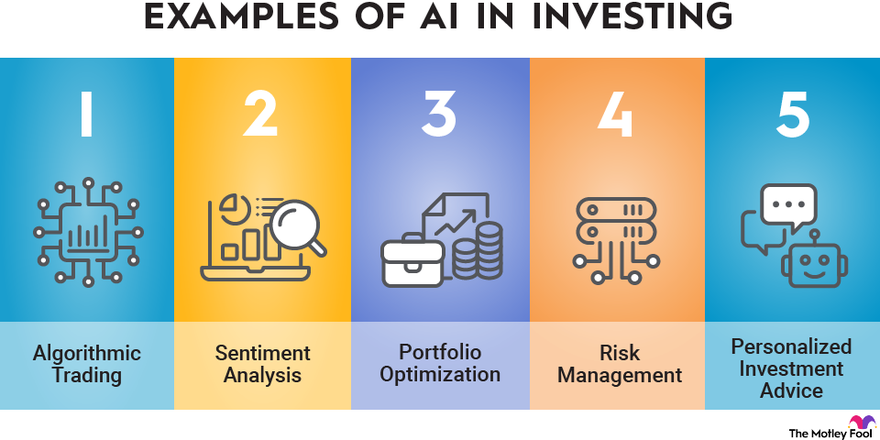
Analyzing the quality of the sources and data utilized by AI-driven stock predictions as well as trading platforms is critical for ensuring reliable and accurate insights. A poor quality of data could lead to inaccurate predictions, financial losses or a lack of trust towards the platform. Here are 10 top tips to evaluate the quality of data and the sources it comes from.
1. Verify the data sources
Check the origins of the data. Ensure that the platform is based on credible, reliable sources of data (e.g. Bloomberg Reuters Morningstar or stock exchanges like NYSE, NASDAQ).
Transparency. Platforms should disclose their data sources and regularly updated.
Avoid single-source dependencies: Reliable platforms typically aggregate data across multiple sources in order to limit mistakes and bias.
2. Examine the freshness of data
Real-time vs. Delayed Data: Find out whether the platform provides actual-time data or delaying information. Real-time data is crucial for active trading. The delayed data is sufficient for long term analysis.
Update frequency: Check when the data has been changed.
Historical data accuracy: Ensure the accuracy of historical data and that it is free of anomalies or gaps.
3. Evaluate Data Completeness
Search for missing data. Examine for any gaps in the historical data, missing tickers and incomplete financial statements.
Coverage: Make sure that the platform is able to cover a broad range of stocks, indices and markets that are that are relevant to your strategy for trading.
Corporate actions: Make sure that your platform is able to take into account stock splits and dividends in addition to mergers and other corporate actions.
4. Accuracy of Test Data
Data consistency can be guaranteed by comparing the data on the platform to other reliable sources.
Find errors: Check for asymmetry, inaccurate prices or financial metrics that are not in sync.
Backtesting. Use the historical data to test your trading strategy and see whether it is in line with expectations.
5. Measure Data Granularity
The platform must provide detailed information, including intraday prices volumes, volumes, bid-ask as well as order book depth.
Financial metrics: Determine whether your platform has comprehensive financial reports (income statement and balance sheet) as well crucial ratios, such as P/E/P/B/ROE. ).
6. Check for Data Cleansing and Preprocessing
Normalization of data is crucial to ensure consistency.
Outlier handling: Check the way your system handles anomalies or data that is outliers.
Incorrect data: Check to see if your platform is using solid methods to fill in the data that is missing.
7. Evaluate the data consistency
Timezone alignment: Ensure that all data are aligned with the local time zone in order to prevent discrepancies.
Format consistency: Make sure that the information has been presented consistently (e.g. units, currency).
Verify that the data is consistent across markets: Check for consistency from various exchanges or markets.
8. Assess Data Relevance
Relevance to your strategy for trading The data you are using is compatible with your style of trading (e.g. analytical techniques or qualitative modeling and fundamental analysis).
Features selection: See whether the platform has pertinent features (e.g. sentiment analysis, macroeconomic indicators and news data) that can help improve the accuracy of predictions.
Verify the security and integrity of your data
Data encryption: Ensure that the platform safeguards data while it is being transmitted and stored.
Tamper-proofing : Check that the data has not been manipulated by the platform.
Compliance: Check to see if the platform adheres to laws regarding data protection.
10. Test the platform's AI model transparency
Explainability - Ensure that the platform offers insights on the way in which the AI model utilizes the data in order to produce predictions.
Bias detection: Find out whether the platform monitors and reduces biases in the data or model.
Performance metrics. Evaluate the performance metrics like precision, accuracy, and recall to assess the reliability of the system.
Bonus Tips
User feedback and reputation Review user reviews and feedback to determine the platform's reliability.
Trial period: Test the platform for free to test the functionality and what features are offered before you commit.
Support for customers: Make sure the platform offers robust customer support to resolve issues related to data.
By following these tips, you can better assess the data quality and sources of AI platform for stock predictions to ensure you take well-informed and trustworthy trading decisions. Have a look at the recommended learn how to invest in stocks blog for website recommendations including best stock websites, trading investment, ai stock companies, ai for stock trading, publicly traded ai companies, stock analysis, publicly traded ai companies, stock market analysis, learn how to invest in stocks, ai investing and more.

Top 10 Tips For Evaluating The Speed And Latency Of Ai Trading Platforms
When you are evaluating AI trading platforms that predict/analyze stock prices the speed and latency of processing are crucial factors, especially for algorithmic traders and high-frequency traders. Milliseconds aren't the only thing that can impact the execution of trades and even profitability. Here are 10 top strategies to evaluate the speed and latency of these platforms.
1. Real-time data feeds: How do you assess them
Speed of data delivery Make sure your platform provides live data (e.g. sub-millisecond delay).
Data source proximity: To cut down the time it takes to transmit data, check whether your platform's servers can be found near exchanges that are major.
Data compression: Make sure that the platform is using efficient data compression in order to speed up data delivery.
2. Speed of execution test for trades
Order processing time: Measure how quickly the platform handles and executes trades once you submit an order.
Direct market access (DMA) Make sure that the exchange platform provides DMA which allows orders to be sent directly to the exchange without intermediaries.
Reports on execution. Verify that the platform has detailed execution reports. The reports should contain dates for order submission, confirmation and fill.
3. Review the responsiveness of the Platform
User interface speed (UI) Test how fast the platform's user interface responds your inputs.
Updates to charts Check to see if the charts and visualizations are updated in real-time with no lag.
Performance of mobile app: If you use an app for mobile on your smartphone, make sure that it is as responsive as its desktop counterpart.
4. Verify that the infrastructure is low-latency.
Server Locations: Choose servers with low-latency that are near major financial centers, or exchanges.
Co-location Services: Check whether the platform supports co-location. This allows you to store your trading algorithm on servers close to the Exchange.
High-speed network: Check if the platform utilizes high-speed fibre optic networks, or other technologies with low latency.
5. Check the backtesting speed and simulation speed.
Test how fast the platform analyses and processes old data.
Simulation latency: Make sure that the platform simulates trades in real time without any noticeable delays.
Parallel processing: Determine if your platform uses parallel or distributed computing to accelerate calculations.
6. Calculate API Latency
API responses: Determine how quickly APIs can respond to queries (e.g., fetching data from the platform, or placing orders).
Rate limits: Check that the API has acceptable rates to avoid delays during high-frequency trading.
WebSocket support: Find out if the platform uses WebSocket protocols for real-time, low-latency streaming of data.
7. Test Platform Stability Under Load
High-volume Trading: Play with high numbers of trading scenarios to determine if your platform is reliable and stable.
Market volatility Test the platform in times of extreme market volatility to make sure that it can handle sudden price fluctuations.
Find out if there are tools available for testing strategies in extreme situations.
8. Examine network and connectivity
Internet speed demands. Check that your internet connection meets recommended speeds for the platform to guarantee optimal performance.
Check for redundant connections.
VPN latency. If using VPN, VPN look to see whether it creates a significant amount of latency.
9. Look for Speed Optimisation Features
Pre-trade Analytics: Ensure that the platform offers pre-trade analysis to improve order routing, execution speed and many other aspects.
Smart order routing (SOR): Verify if the platform uses SOR to determine the most efficient and most cost-effective execution venues.
Monitoring latency: Find out whether your platform comes with tools that allow you to analyse and monitor latency in real time.
Review Benchmarks and User Feedback
User reviews: Check for user feedback on the site to gauge the speed and latency of the platform.
Benchmarks from third parties Find independent benchmarks or reviews that evaluate the speed of the platform versus the speed of its rivals.
Case studies and testimonials Check if there are any cases that show the effectiveness of the platform's low-latency capabilities.
Bonus Tips:
Utilize the trial period or free demo period to test your platform’s speed and latency in real-world conditions.
Customer support - Check if there is a support service available for problems related to latency, optimization, or any other problems.
Hardware specifications. Check if the system is compatible with specific hardware like high-performance computers.
By following these tips to evaluate the performance and speed of AI platform for predicting or analyzing stocks, ensuring you choose the best platform for the requirements of your trading and eliminates delays. Platforms that are low-latency are crucial for high-frequency algorithmic traders. small delays could negatively impact their profits. See the most popular free ai tool for stock market india blog for more info including ai options trading, ai stock prediction, best ai copyright, ai stock price prediction, ai stock prediction, best ai stock prediction, best ai for stock trading, best ai trading platform, ai for trading stocks, ai stock predictions and more.